Against MonopolyAgainst Monopoly2018-05-24T06:10:20-08:00tag:www.againstmonopoly.org,2018:/www.dklevine.comCopyright (c) 2018, The AuthorsAgainst Monopoly: fdsfs2018-05-24T06:10:20-08:002018-05-24T06:10:20-08:00tag:www.againstmonopoly.org,2018:blog58058080000000007532018-05-24T06:10:20-08:00fsdfsdffdsfdshttp://www.againstmonopoly.org/sp.2014@live.frAgainst MonopolyPharmaceutical Patents: Killing people with patents2015-05-16T00:18:34-08:002015-05-16T00:18:34-08:00tag:www.againstmonopoly.org,2018:blog58058080000000007092015-05-16T00:18:34-08:00Michele and I have long pointed out the human cost of pharmaceutical patents during the AIDS crisis in Africa (and were hardly the first to do so). Via Andy Neumeyer a new film documenting just how bad it was. Trailer%26lt;a href=" https://vimeo.com/ondemand/fireinblood "%26gt; here%26lt;/a%26gt;David K. Levinehttp://www.againstmonopoly.org/david@dklevine.comPharmaceutical Patents here
]]>Culture and IP: Dr. Who?2015-05-16T00:14:37-08:002015-05-16T00:14:37-08:00tag:www.againstmonopoly.org,2018:blog58058080000000007082015-05-16T00:14:37-08:00Via Werner Ploberger - the sad tale of reconstructing (or not...) missing episodes of
%26lt;a href="http://www.samizdata.net/2014/12/what-the-saga-of-doctor-whos-missing-episodes-can-tell-us-about-the-nature-of-the-state/"%26gt;Dr. Who%26lt;/a%26gt; David K. Levinehttp://www.againstmonopoly.org/david@dklevine.comCulture and IPDr. Who
]]>Patent Trolls: An analysis of patent trolls by a trademark lawyer2015-05-16T00:12:07-08:002015-05-16T00:12:07-08:00tag:www.againstmonopoly.org,2018:blog58058080000000007072015-05-16T00:12:07-08:00Via Randy Ray: %26lt;a href="http://secureyourtrademark.com/blog/patent-trolls/"%26gt;Patent trolls%26lt;/a%26gt;David K. Levinehttp://www.againstmonopoly.org/david@dklevine.comPatent TrollsPatent trolls
]]>Patents: The right to rub smooth using a hardened steel tool with ridges2015-01-17T13:23:12-08:002015-01-17T13:23:12-08:00tag:www.againstmonopoly.org,2018:blog58058080000000006962015-01-17T13:23:12-08:00In the previous post, we argued that the idea that a person can be "hired to invent" is a contradiction in terms. Unless we abandon the doctrine of non-obviousness as a criterion for patentability, we are led to conclude that patentable inventions made on the job are suprising, not an expected result of being paid, and should therefore belong to the employee, not the employer.
Note that here we are making a distinction between patentability and use. An employer pays an employee to perform a job; the employer should have the right to make use of the results of that employee's work. The right to make use of the product of paid labor is known as a "shop right" in legal parlance. Shop rights are independent of any patent system, do not create a monopoly, and should be preserved, even if the result is better than the employer could have expected. An employee should have the right to file for a patent on her or his own, but if one is granted, they should not have the right sue the employer who paid for the work for using it.
In practice, a system in which employees can file patents independently would not look a lot different from today's sytem. In most cases, given that an employer offers modest compensation and recognition, the employee will happily forego the cost and effort of an application for a patent whose utility might be questionable on its own. Even if they did not immediately assign the idea, it is likely they would be willing to sell the granted patent, at a somewhat higher price, to the employer, who (if they are using the idea) have a more compelling interest in the granted patent than others. Or an employee could simply refuse to file, avoiding the creation of another (often unjustufied) monopoly.
The result would be a small net transfer of some assets from corporations to their more ingenious employees. The change may be deleterious to investment returns, and perhaps to patent attorney fees, but harmless or mildly beneficial to society as a whole. And in those rarer cases where an inventive idea is truly revolutionary, the inventor can choose to offer it to a competitor or charge off on their own. Society is presented with (at the least) a duopoly rather than a monopoly, a generally less-harmful result.
What about the case where the invention involves "proprietary" information, that is, information which the corporation does not wish to release to the public? We first recall that in the existing system, an inventor must reveal all information needed to practice the claimed invention, whether or not it is assigned to an employer. If an invention is assigned, and an application filed, disclosure has occurred. So the only dispute is over those cases where information would not be disclosed if not for the possibility of receiving a patent on it. The correct response touches on the question of why society should encourage concealment at all, the answer being in general that we should not. Keeping tactical information secret for short times is useful to businesses, and has minimal impact on society, but long-term secrecy has no social benefit and merely encourages concentration of information and therefore wealth. It would therefore be reasonable to give an employer the right to impose a slightly-longer delay to publication (say, 24 months) for applications filed by employees and not assigned to their employers, with a corresponding delay in independent disclosure. Society as a whole has no reason to enforce indefinite secrecy on any citizen to benefit a business, and should not do so. And no restriction should apply where the inventor can show that only public information, and the invention itself, are disclosed.
In the United States, employee-employer relations are mostly administered by the state governments. Reform of these arrangements is therefore a state-by-state activity, which has the benefit that the impact of changes can be examined before the whole country bears a risk. In California, for example, compulsory assignment is limited by section 2870 of the California Labor Code, which protects the right of an employee to pursue a patent for an invention which is not related to his or her work and did not use the resources of the employer. In other states, like Texas, employees are not so lucky, as we saw previously. As Professor Lobel has shown in her book, the limitations on assignment that already exist in California have not impaired innovation in that state, but have arguably enhanced it (an obvious conclusion for those who live here in Silicon Valley). Further reform can be pursued without expectation of catastrophic consequences.
Daniel Dobkinhttp://www.againstmonopoly.org/dan@enigmatic-consulting.comPatentsNote that here we are making a distinction between patentability and use. An employer pays an employee to perform a job; the employer should have the right to make use of the results of that employee's work. The right to make use of the product of paid labor is known as a "shop right" in legal parlance. Shop rights are independent of any patent system, do not create a monopoly, and should be preserved, even if the result is better than the employer could have expected. An employee should have the right to file for a patent on her or his own, but if one is granted, they should not have the right sue the employer who paid for the work for using it.
In practice, a system in which employees can file patents independently would not look a lot different from today's sytem. In most cases, given that an employer offers modest compensation and recognition, the employee will happily forego the cost and effort of an application for a patent whose utility might be questionable on its own. Even if they did not immediately assign the idea, it is likely they would be willing to sell the granted patent, at a somewhat higher price, to the employer, who (if they are using the idea) have a more compelling interest in the granted patent than others. Or an employee could simply refuse to file, avoiding the creation of another (often unjustufied) monopoly.
The result would be a small net transfer of some assets from corporations to their more ingenious employees. The change may be deleterious to investment returns, and perhaps to patent attorney fees, but harmless or mildly beneficial to society as a whole. And in those rarer cases where an inventive idea is truly revolutionary, the inventor can choose to offer it to a competitor or charge off on their own. Society is presented with (at the least) a duopoly rather than a monopoly, a generally less-harmful result.
What about the case where the invention involves "proprietary" information, that is, information which the corporation does not wish to release to the public? We first recall that in the existing system, an inventor must reveal all information needed to practice the claimed invention, whether or not it is assigned to an employer. If an invention is assigned, and an application filed, disclosure has occurred. So the only dispute is over those cases where information would not be disclosed if not for the possibility of receiving a patent on it. The correct response touches on the question of why society should encourage concealment at all, the answer being in general that we should not. Keeping tactical information secret for short times is useful to businesses, and has minimal impact on society, but long-term secrecy has no social benefit and merely encourages concentration of information and therefore wealth. It would therefore be reasonable to give an employer the right to impose a slightly-longer delay to publication (say, 24 months) for applications filed by employees and not assigned to their employers, with a corresponding delay in independent disclosure. Society as a whole has no reason to enforce indefinite secrecy on any citizen to benefit a business, and should not do so. And no restriction should apply where the inventor can show that only public information, and the invention itself, are disclosed.
In the United States, employee-employer relations are mostly administered by the state governments. Reform of these arrangements is therefore a state-by-state activity, which has the benefit that the impact of changes can be examined before the whole country bears a risk. In California, for example, compulsory assignment is limited by section 2870 of the California Labor Code, which protects the right of an employee to pursue a patent for an invention which is not related to his or her work and did not use the resources of the employer. In other states, like Texas, employees are not so lucky, as we saw previously. As Professor Lobel has shown in her book, the limitations on assignment that already exist in California have not impaired innovation in that state, but have arguably enhanced it (an obvious conclusion for those who live here in Silicon Valley). Further reform can be pursued without expectation of catastrophic consequences.
]]>Patents: Your Compulsory Assignment for Tonight2015-01-11T10:01:59-08:002015-01-11T10:01:59-08:00tag:www.againstmonopoly.org,2018:blog58058080000000006952015-01-11T10:01:59-08:00In Orly Lobel's book %26lt;b%26gt;Talent Wants to Be Free%26lt;/b%26gt;, she tells the story of Evan Brown. Mr. Brown, while employed by Alcatel in Texas, arrived at a solution to a computing problem that he had been thinking about long before he was hired by Alcatel, and which was not related to his work for his employer. He disclosed this fact to his employer, and though he had never written anything down, Alcatel claimed ownership of the idea and eventually compelled him to record it (without pay, we note, after extended litigation) and assign it to them.
The first object of curiosity is why Mr. Brown didn't have the sense to conveniently forget that he'd ever thought of the solution, at least until he had moved to a jurisdiction with more respect for individual rights. But the underlying question to be asked is: why is an employee compelled to assign rights to inventions to their employer?
The authority for "intellectual property" law in the United States, section VIII of the US constitution, gives Congress the privilege of establishing exclusive rights for "authors and inventors". It makes no mention of corporations or other employers. And yet, as we have noted, 90% of all patents issued today are owned by corporations. Corporations normally require their technical employees to sign agreements compelling the employee to assign all exclusive rights to the corporation.
The theory underlying compulsory assignment is the idea that technical employees are "hired to invent". This is an interesting contradiction in terms. If an employee is hired and paid to solve a certain problem, we can reasonably assume that the employer expects the problem to be solved with high probability of success, and therefore the solution to the problem is an expected result of the activity for which the employee is paid. If the solution is the expected result of asking a person of appropriate skill to work on a problem, how can it be non-obvious (that is, surprising and not expected) to such a person? If the solution is an expected result of the activity, and therefore obvious or at least hardly surprising, how can it be inventive enough to deserve a patent? If it is surprising that an employee solves the problem they are assigned to solve, we should expect employees to be paid to fail in the normal (expected) case. I have not observed such an inclination in my three decades of commercial employment. We are led to conclude that "inventions" that are made in the course of work that an employee is expected to complete cannot be patentable. Only inventions that are not related to their assigned work could be regarded as surprising and non-obvious.
So we can assert that most of the 90% of filings in the United States that are created by corporate employees and assigned perforce to their employers are inherently unpatentable. If corporations don't like this answer, they have to admit that they don't hire people to invent novel and surprising things. One solution to the conundrum, of course, is to abandon the bizarre categorization of ideas into "obvious" and "non-obvious", by using claimless patents, as advocated in our earlier posts. If this is not an acceptable path, corporations and courts ought to abandon the doctrine that an employee is "hired to invent", and realize that any actual non-obvious inventions must be surprising, unexpected, and not the predictable result of being paid. Therefore those inventions don't belong to the employer, but to the inventor, as prescribed by the Constitution.
In the next post, we'll examine some sensible revisions of the doctrine of compulsory assignment.
Daniel Dobkinhttp://www.againstmonopoly.org/dan@enigmatic-consulting.comPatentsTalent Wants to Be Free, she tells the story of Evan Brown. Mr. Brown, while employed by Alcatel in Texas, arrived at a solution to a computing problem that he had been thinking about long before he was hired by Alcatel, and which was not related to his work for his employer. He disclosed this fact to his employer, and though he had never written anything down, Alcatel claimed ownership of the idea and eventually compelled him to record it (without pay, we note, after extended litigation) and assign it to them.
The first object of curiosity is why Mr. Brown didn't have the sense to conveniently forget that he'd ever thought of the solution, at least until he had moved to a jurisdiction with more respect for individual rights. But the underlying question to be asked is: why is an employee compelled to assign rights to inventions to their employer?
The authority for "intellectual property" law in the United States, section VIII of the US constitution, gives Congress the privilege of establishing exclusive rights for "authors and inventors". It makes no mention of corporations or other employers. And yet, as we have noted, 90% of all patents issued today are owned by corporations. Corporations normally require their technical employees to sign agreements compelling the employee to assign all exclusive rights to the corporation.
The theory underlying compulsory assignment is the idea that technical employees are "hired to invent". This is an interesting contradiction in terms. If an employee is hired and paid to solve a certain problem, we can reasonably assume that the employer expects the problem to be solved with high probability of success, and therefore the solution to the problem is an expected result of the activity for which the employee is paid. If the solution is the expected result of asking a person of appropriate skill to work on a problem, how can it be non-obvious (that is, surprising and not expected) to such a person? If the solution is an expected result of the activity, and therefore obvious or at least hardly surprising, how can it be inventive enough to deserve a patent? If it is surprising that an employee solves the problem they are assigned to solve, we should expect employees to be paid to fail in the normal (expected) case. I have not observed such an inclination in my three decades of commercial employment. We are led to conclude that "inventions" that are made in the course of work that an employee is expected to complete cannot be patentable. Only inventions that are not related to their assigned work could be regarded as surprising and non-obvious.
So we can assert that most of the 90% of filings in the United States that are created by corporate employees and assigned perforce to their employers are inherently unpatentable. If corporations don't like this answer, they have to admit that they don't hire people to invent novel and surprising things. One solution to the conundrum, of course, is to abandon the bizarre categorization of ideas into "obvious" and "non-obvious", by using claimless patents, as advocated in our earlier posts. If this is not an acceptable path, corporations and courts ought to abandon the doctrine that an employee is "hired to invent", and realize that any actual non-obvious inventions must be surprising, unexpected, and not the predictable result of being paid. Therefore those inventions don't belong to the employer, but to the inventor, as prescribed by the Constitution.
In the next post, we'll examine some sensible revisions of the doctrine of compulsory assignment.
]]>Patent: Let's See: Pallas, Pan, Patents, Persephone, Perses, Poseidon, Prometheus...2014-12-14T13:26:37-08:002014-12-14T13:26:37-08:00tag:www.againstmonopoly.org,2018:blog58058080000000006932014-12-14T13:26:37-08:00When people think of patents, if they do at all, they usually picture a crazed inventor who looks a lot like Christopher Lloyd in %26lt;b%26gt;Back to the Future%26lt;/b%26gt;, working late nights in the lab to come up with something completely crazy and absolutely amazing, that no one else would ever have thought of:
%26lt;a href="https://www.youtube.com/watch?v=k0kswK2aI08"%26gt;What a DeLorean is Good For...%26lt;/a%26gt;
If you've read this series of posts you know that this image is mostly mythological. The vast majority of patents are owned by corporations at filing, and describe minor modifications of what has gone before, if they describe anything useful at all. But that doesn't mean there isn't the occasional individual making a real contribution to a field.
Today, if that person wants to realize a profit from her or his work, they may choose to file for one or more patents and then either try to fund a company, sell the patents to a company, or just go sue people after others come up with the idea on their own. We have argued that the last behavior should not be supported or encouraged: no social value has been added. Let's replace it with a more worthwhile alternative, consistent with the open-source world, for individuals filing patents.
Once a patent filed by an individual or group of individuals is allowed, they should have the option of laying the patent open to the public. We might forgive them the issuance fee (only a few hundred bucks anyway for a %26lt;a href="http://www.uspto.gov/patents/law/micro_entity.jsp"%26gt;"micro-entity"%26lt;/a%26gt;). Once a patent is laid open, it becomes part of the public domain, and cannot be converted back to property. However, the inventor or inventors become eligible for inventor awards. The USPTO will be responsible to administer the awards, which should be granted to inventors whose patents have proven useful in the relevant fields. Evaluation could sensibly wait 3 to 5 years to separate out stuff that actually works from the merely promising. That's also a time scale a government agency can handle, and it's not very different from the time needed to form a company and build a business. Awards ought to be big enough to get excited about - say $100,000, providing a 5-10x return on the cost to file. This is similar to the popular small business innovation research grants (SBIR) program, whose awards range from $40,000 to $100,000 for phase 1. Note that once a patent is laid open, all continuations must also be open, since otherwise the inventor could do a bait-and-switch to sue the user of the laid-open version with slightly different claims.
These awards could be easily funded from application fees. As we noted in a previous post, only 10% of applications are assigned to individual inventors. If 10% of those are laid open, and 10% of laid open patents receive an award (which is pretty generous), only one of 1000 granted patents is awarded. Adding $100 to application fees would cover the direct cost. That's about $40M for the 400,000 patents issued each year -- not a lot of money, but certainly welcome for the winners. Including a few special awards at e.g. $1M each would make a big public impact without costing much.
Having the USPTO administer the system is no worse than having the USPTO grant these monopolies in the first place. If the USPTO were required to reach out to industry to evaluate candidates, the process would have the ancillary benefit of exposing examiners to how ideas become useful (or not) in the real world. Companies will have no particular incentive to be deceptive about a method they are free to use, or an award they pay for anyway (as do their competitors), though of course political games and under-the-table payments will naturally occur at times. The candidate inventors could take no action, or campaign vigorously for companies to adopt their methods -- the latter being a great way to see if they've actually done anything useful.
A change like this would require legislation, but it should be relatively easy to achieve. The cost is small, it is in accord with public perception of the system, and provides nifty photo ops. Should some of the changes proposed in previous posts be implemented (not likely any time soon!), an award system would provide a way to compensate individuals for whom, for example, the path to demonstrating enablement had become prohibitively expensive and time-consuming.
And if it didn't work out, you could always get in the DeLorean, accelerate to 88, and go back the way things were before. Doesn't that work?
Daniel Dobkinhttp://www.againstmonopoly.org/dan@enigmatic-consulting.comPatentBack to the Future, working late nights in the lab to come up with something completely crazy and absolutely amazing, that no one else would ever have thought of:
What a DeLorean is Good For...
If you've read this series of posts you know that this image is mostly mythological. The vast majority of patents are owned by corporations at filing, and describe minor modifications of what has gone before, if they describe anything useful at all. But that doesn't mean there isn't the occasional individual making a real contribution to a field.
Today, if that person wants to realize a profit from her or his work, they may choose to file for one or more patents and then either try to fund a company, sell the patents to a company, or just go sue people after others come up with the idea on their own. We have argued that the last behavior should not be supported or encouraged: no social value has been added. Let's replace it with a more worthwhile alternative, consistent with the open-source world, for individuals filing patents.
Once a patent filed by an individual or group of individuals is allowed, they should have the option of laying the patent open to the public. We might forgive them the issuance fee (only a few hundred bucks anyway for a "micro-entity"). Once a patent is laid open, it becomes part of the public domain, and cannot be converted back to property. However, the inventor or inventors become eligible for inventor awards. The USPTO will be responsible to administer the awards, which should be granted to inventors whose patents have proven useful in the relevant fields. Evaluation could sensibly wait 3 to 5 years to separate out stuff that actually works from the merely promising. That's also a time scale a government agency can handle, and it's not very different from the time needed to form a company and build a business. Awards ought to be big enough to get excited about - say $100,000, providing a 5-10x return on the cost to file. This is similar to the popular small business innovation research grants (SBIR) program, whose awards range from $40,000 to $100,000 for phase 1. Note that once a patent is laid open, all continuations must also be open, since otherwise the inventor could do a bait-and-switch to sue the user of the laid-open version with slightly different claims.
These awards could be easily funded from application fees. As we noted in a previous post, only 10% of applications are assigned to individual inventors. If 10% of those are laid open, and 10% of laid open patents receive an award (which is pretty generous), only one of 1000 granted patents is awarded. Adding $100 to application fees would cover the direct cost. That's about $40M for the 400,000 patents issued each year -- not a lot of money, but certainly welcome for the winners. Including a few special awards at e.g. $1M each would make a big public impact without costing much.
Having the USPTO administer the system is no worse than having the USPTO grant these monopolies in the first place. If the USPTO were required to reach out to industry to evaluate candidates, the process would have the ancillary benefit of exposing examiners to how ideas become useful (or not) in the real world. Companies will have no particular incentive to be deceptive about a method they are free to use, or an award they pay for anyway (as do their competitors), though of course political games and under-the-table payments will naturally occur at times. The candidate inventors could take no action, or campaign vigorously for companies to adopt their methods -- the latter being a great way to see if they've actually done anything useful.
A change like this would require legislation, but it should be relatively easy to achieve. The cost is small, it is in accord with public perception of the system, and provides nifty photo ops. Should some of the changes proposed in previous posts be implemented (not likely any time soon!), an award system would provide a way to compensate individuals for whom, for example, the path to demonstrating enablement had become prohibitively expensive and time-consuming.
And if it didn't work out, you could always get in the DeLorean, accelerate to 88, and go back the way things were before. Doesn't that work?
]]>Patents: Claiming Countability Cancels Claims Creates a Cacophony of Cantankerous Counterexamples?2014-12-07T11:47:29-08:002014-12-07T11:47:29-08:00tag:www.againstmonopoly.org,2018:blog58058080000000006922014-12-07T11:47:29-08:00In the previous posts we described an alternative way of thinking about patents, where we abandon patent claims. Instead, we try to measure the differences between what is described and what has gone before by counting the changes one makes to the instructions by which a person is taught how to make the new object. We provided a couple of examples of how one might undertake such a task. Even more than previous proposals, this one involves some conceptually difficult questions that would need to be resolved before one could proceed, even if such a proceeding were politically practical.
%26lt;b%26gt;CHALLENGES%26lt;/b%26gt;
In our archetypal example of the block building kids, we asserted a specific scale for counting an instruction. For example, "place two blocks parallel to one another, but separated by less than the length of the orthogonal blocks" was one instruction. How did we choose this scale? For example, I could instead choose to specify all the constituents of this action as instructions:
1. grab a block from the block box
2. place the block on the floor
3. orient the block to an arbitrary angle from true north
4. note that angle
5. grab a second block of the same length, width, and height from the block box
6. place the second block at the same arbitrary angle from true north to within +/- 15 degrees
...and so on. This is more like the set of instructions you might provide to a robot to undertake the block building task.
Now, note that the list of instructions becomes very long, but we see that we can still make an argument that only a few of them would be new instructions for the interpenetrating block building that was the topic of our "invention". Most of these instructions are the same as the instructions for the previous non-interprenetrating block building. So it seems plausible that, no matter how you structure the instruction list, there's a sort of conserved quantity that characterizes a new block building type.
Similarly, in the case of US 8,698,473 examined in the previous post, we could make the instruction set "grainier" by including e.g. the exact value of saturation current of the current source, the compliance (range of voltages over which the current source provides a fixed amount of current), the current carrying capacity of the wire you use to hook the current source up, and innumerable other technical details. It seems plausible that the same argument could be made that most of these instructions exist in the prior art, and only a few specific new combinations are associated with the "inventive" configuration of Kimura's Figure 1.
So in order to make claimless patenting work, we'd need to demonstrate that there's a reasonably consistent means of arriving at the difference between prior art instruction sets and the "new" one in each case. It seems very likely that the methods for defining new and old instructions will differ from one area of art to another. For example, if I want to patent a chemical compound that no one else has made before, in the claimless method what I patent is the method of synthesis and the method of analysis, because that's what is different from what came before. It seems likely we would need to have chemists think through what constitute elementary steps for synthesizing a new compound, and present the set of reasonable ways to count the steps and therefore the distance from an old synthesis to a new one. Don't ask me, I connect wires to things. The same remarks apply to mechanical engineering, metallurgy, signal processing, web software, and any other area of art. So to implement any claimless system would probably require an extensive and likely ongoing body of work by people with expertise in each area of art for which patents are allowed. Professors take note.
As we alluded to previously, the results of such a process are likely to produce a range of alternatives that can be chosen for a given patent application in a given area of art. Choosing one of the many alternatives will be a tradeoff of the distance from the prior art for the instant application, and the way of measuring distance to likely infringers. Because applicants will be required to demonstrate that their application is enabled, the distance measurement chosen will also be important for them to ensure that the enabled working example is closer to their patent application than the prior art is -- as the reader may recall, if this condition fails the patent is declared invalid. It's politically beneficial and probably practically beneficial to leave room for the ingenuity of the attorney as well as the inventor in the patent process.
%26lt;b%26gt;BENEFITS%26lt;/b%26gt;
The claimless patent approach is based on instructions and methods. These are real and demonstrable objects. They define a person of ordinary skill for the relevant task, and can be verified by finding such people and showing that they can construct the required objects given the correct instructions. Assertions made by the applicant are testable, and will surely be tested in litigation. I don't patent a new chemical, I patent a method to make something new and verify that it is. If someone copies my method I can sue them. If they find their own synthesis, more different from mine than mine was from what went before, they do not infringe, even if it includes all the elements I used. The claimless system prevents copying -- benefiting from all the work I did without paying for it -- but it does not block progress, where you do just as much work and add just as much value. The claimless system meets the requirements of the US Constitution that it "promote the progress of science and the useful arts", which the existing patent system does not do.
The requirement that enablement be demonstrated to be close to the method described in an application blocks the useless disclosures that pollute the existing system. A defendant can pick up the application, hand it to a person of ordinary skill, and demonstrate that they get stuck, having first shown that the same type of instruction sets successfully enabled that person to produce prior art objects that worked. In the process they have also defined a person of ordinary skill in the relevant art, in today's system a completely nebulous concept that is never tested. The best way to file in the claimless system is to go build the invention and then grab the list of instructions used and file them, so that the applicant is armed with a clear demonstration of enablement from day one.
The claimless system is better suited to the complexity of the real world. In the existing system, it is essentially impossible to verify that a new product will not infringe on granted patents, because of the admitted ambiguity of the system of patent claims. In the claimless system, I just need to search for my instruction set, and count the differences between it and what I find -- a task admirably suited to the big-data world, as long as we have successfully defined the elementary steps for each field as noted above. Better still, potential infringement doesn't block me -- it just sets a higher standard for what I need to produce. In the claimless world, more patent applications will be filed, but each application will be much easier to prosecute, assert, and refute as appropriate.
%26lt;b%26gt;Implementation%26lt;/b%26gt;
Some serious technical work is needed before the hard political lifting would even begin to create example rubrics for fields of art: elementary instruction sets and how to count them. The place to start is joint research of law school professors and their colleagues in technical areas, e.g. computer science or pharmaceutical development. Write if you're interested.
Daniel Dobkinhttp://www.againstmonopoly.org/dan@enigmatic-consulting.comPatentsCHALLENGES
In our archetypal example of the block building kids, we asserted a specific scale for counting an instruction. For example, "place two blocks parallel to one another, but separated by less than the length of the orthogonal blocks" was one instruction. How did we choose this scale? For example, I could instead choose to specify all the constituents of this action as instructions:
1. grab a block from the block box
2. place the block on the floor
3. orient the block to an arbitrary angle from true north
4. note that angle
5. grab a second block of the same length, width, and height from the block box
6. place the second block at the same arbitrary angle from true north to within +/- 15 degrees
...and so on. This is more like the set of instructions you might provide to a robot to undertake the block building task.
Now, note that the list of instructions becomes very long, but we see that we can still make an argument that only a few of them would be new instructions for the interpenetrating block building that was the topic of our "invention". Most of these instructions are the same as the instructions for the previous non-interprenetrating block building. So it seems plausible that, no matter how you structure the instruction list, there's a sort of conserved quantity that characterizes a new block building type.
Similarly, in the case of US 8,698,473 examined in the previous post, we could make the instruction set "grainier" by including e.g. the exact value of saturation current of the current source, the compliance (range of voltages over which the current source provides a fixed amount of current), the current carrying capacity of the wire you use to hook the current source up, and innumerable other technical details. It seems plausible that the same argument could be made that most of these instructions exist in the prior art, and only a few specific new combinations are associated with the "inventive" configuration of Kimura's Figure 1.
So in order to make claimless patenting work, we'd need to demonstrate that there's a reasonably consistent means of arriving at the difference between prior art instruction sets and the "new" one in each case. It seems very likely that the methods for defining new and old instructions will differ from one area of art to another. For example, if I want to patent a chemical compound that no one else has made before, in the claimless method what I patent is the method of synthesis and the method of analysis, because that's what is different from what came before. It seems likely we would need to have chemists think through what constitute elementary steps for synthesizing a new compound, and present the set of reasonable ways to count the steps and therefore the distance from an old synthesis to a new one. Don't ask me, I connect wires to things. The same remarks apply to mechanical engineering, metallurgy, signal processing, web software, and any other area of art. So to implement any claimless system would probably require an extensive and likely ongoing body of work by people with expertise in each area of art for which patents are allowed. Professors take note.
As we alluded to previously, the results of such a process are likely to produce a range of alternatives that can be chosen for a given patent application in a given area of art. Choosing one of the many alternatives will be a tradeoff of the distance from the prior art for the instant application, and the way of measuring distance to likely infringers. Because applicants will be required to demonstrate that their application is enabled, the distance measurement chosen will also be important for them to ensure that the enabled working example is closer to their patent application than the prior art is -- as the reader may recall, if this condition fails the patent is declared invalid. It's politically beneficial and probably practically beneficial to leave room for the ingenuity of the attorney as well as the inventor in the patent process.
BENEFITS
The claimless patent approach is based on instructions and methods. These are real and demonstrable objects. They define a person of ordinary skill for the relevant task, and can be verified by finding such people and showing that they can construct the required objects given the correct instructions. Assertions made by the applicant are testable, and will surely be tested in litigation. I don't patent a new chemical, I patent a method to make something new and verify that it is. If someone copies my method I can sue them. If they find their own synthesis, more different from mine than mine was from what went before, they do not infringe, even if it includes all the elements I used. The claimless system prevents copying -- benefiting from all the work I did without paying for it -- but it does not block progress, where you do just as much work and add just as much value. The claimless system meets the requirements of the US Constitution that it "promote the progress of science and the useful arts", which the existing patent system does not do.
The requirement that enablement be demonstrated to be close to the method described in an application blocks the useless disclosures that pollute the existing system. A defendant can pick up the application, hand it to a person of ordinary skill, and demonstrate that they get stuck, having first shown that the same type of instruction sets successfully enabled that person to produce prior art objects that worked. In the process they have also defined a person of ordinary skill in the relevant art, in today's system a completely nebulous concept that is never tested. The best way to file in the claimless system is to go build the invention and then grab the list of instructions used and file them, so that the applicant is armed with a clear demonstration of enablement from day one.
The claimless system is better suited to the complexity of the real world. In the existing system, it is essentially impossible to verify that a new product will not infringe on granted patents, because of the admitted ambiguity of the system of patent claims. In the claimless system, I just need to search for my instruction set, and count the differences between it and what I find -- a task admirably suited to the big-data world, as long as we have successfully defined the elementary steps for each field as noted above. Better still, potential infringement doesn't block me -- it just sets a higher standard for what I need to produce. In the claimless world, more patent applications will be filed, but each application will be much easier to prosecute, assert, and refute as appropriate.
Implementation
Some serious technical work is needed before the hard political lifting would even begin to create example rubrics for fields of art: elementary instruction sets and how to count them. The place to start is joint research of law school professors and their colleagues in technical areas, e.g. computer science or pharmaceutical development. Write if you're interested.
]]>Patents: From Blocks to Block Diagrams2014-11-29T21:39:08-08:002014-11-29T21:39:08-08:00tag:www.againstmonopoly.org,2018:blog58058080000000006912014-11-29T21:39:08-08:00In the previous post, we looked at an archetypal ‘invention', the interpenetrated wall block building, from the point of view of claimless patents. Now let's try applying the principles developed there to the more difficult case of a real patent.
The patent we'll look at is US 8,698,473, uninformatively titled "Switching Regulator", from Takeshi Kimura of Yokohama, Japan, assigned to Spansion LLC here in my home town of Sunnyvale, CA. If you like picturesque places, you should visit Yokohama rather than Sunnyvale, preferably the Yokohama that never actually existed, as depicted in Goro Miyazaki's %26lt;b%26gt;From Up On Poppy Hill%26lt;/b%26gt;. No one appears to have spent their time reading patents up on Poppy Hill.
US 8,698,47 is a pretty typical patent: a modest variation on an existing class of products. The topic is a device that converts one electrical voltage to another. For example, a device like the one described could convert the 3.7 volts it gets from a battery in a cellphone into 1.8 volts needed by the interface that the parts in the phone use to talk to each other.
The normal way to look at this application is to focus on the "inventive concept", whatever the heck that is. Instead, in the proposed claimless patent system, we will focus on what you tell a person of ordinary skill in the relevant art to do in order to make the patented thing, and how that set of instructions differs from any previous set. Kimura provides a particularly convenient example that does exactly that, at least if you happen to know something about electrical block diagrams, which a person of ordinary skill in this art certainly would. (For readers whose expertise is thankfully elsewhere, rest assured: you only need to know that the right person would understand what the funny symbols are, not that you do.)
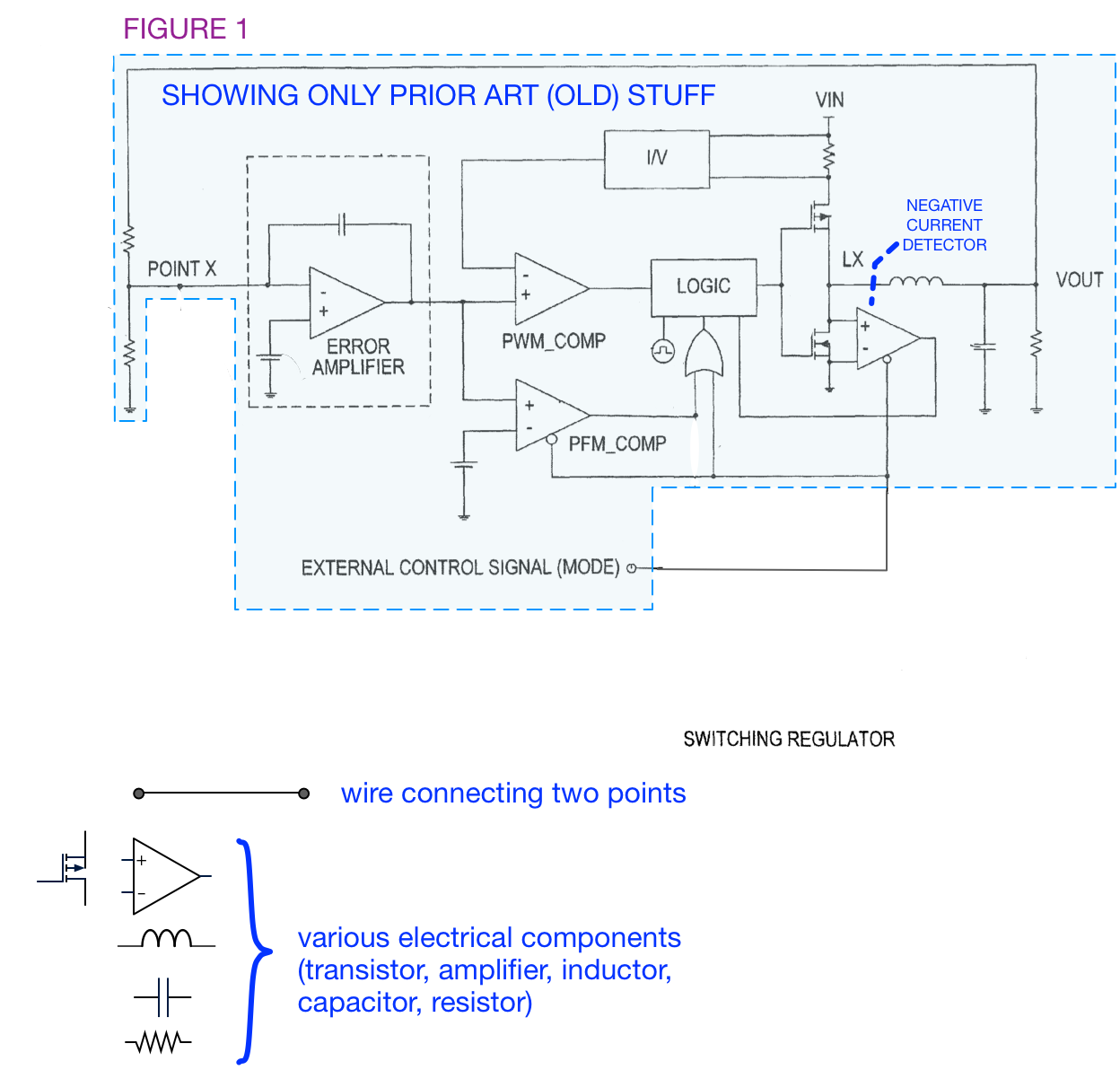
Figure 1 below shows what's called a block diagram for an electrical part. (The figures shown are simplified and annotated versions of Kimura's Figures 1 and 12.) The various funny symbols represent electrical components that do something useful, like resisting the flow of current, storing charge, or amplifying a signal (making it bigger). Each line with dots on the ends represents a wire that conducts electricity between places in the circuit. "VIN" is the input voltage, to be converted to some other voltage "VOUT" (e.g. from 3.7 to 1.8 volts). This picture is an instruction set, telling our skilled person what components they need and how the components are to be connected together.
%26lt;img src="http://www.enigmatic-consulting.com/IP_blog/Kimura_prior_art_cleaned_up.png"%26gt;
If Kimura's converter were to be built using discrete parts (that is, individual resistors and capacitors with wires, like the ones you can still find at Radio Shack), the instructions would also include a bill of materials. The Bill of Materials, or BOM for short, is a long list that tells someone how to buy the parts you need. For each part, there's typically a vendor, a model or part number, and optionally some specifications and pricing. If Kimura's converter were an integrated circuit, constructed as a chip on a silicon wafer, the bill of materials would be at least partially replaced by a specification for each component: how big a transistor to use, what value of resistance is needed for a resistor, and so on. In modern integrated circuit design, many parts are already available as libraries of designs, so the specification might also include something similar to the BOM, describing which library to use, and which named design to place in the circuit. For simplicity, we'll stick to the discrete-part approach below.
So the instructions provided to our skilled person for the prior art stuff would be, for example, the schematic diagram above, and a bill of materials for the parts, or a set of specifications. The skill of our person of ordinary skill in this art is to turn that set of instructions into a product that works as intended. Note that, even if you the reader don't understand what you are looking at, Kimura's application has defined for us the person of ordinary skill: a person for whom our Figure 1 DOES make sense and DOES suffice to describe what they are to build. If you hand this diagram to someone and they look blankly at you and ask "does COMP stand for Compromise?" then you've got the wrong person. The definition of a person of ordinary skill is thus %26lt;b%26gt;%26lt;em%26gt;testable%26lt;/em%26gt;%26lt;/b%26gt;, an important distinction from the existing patent system.
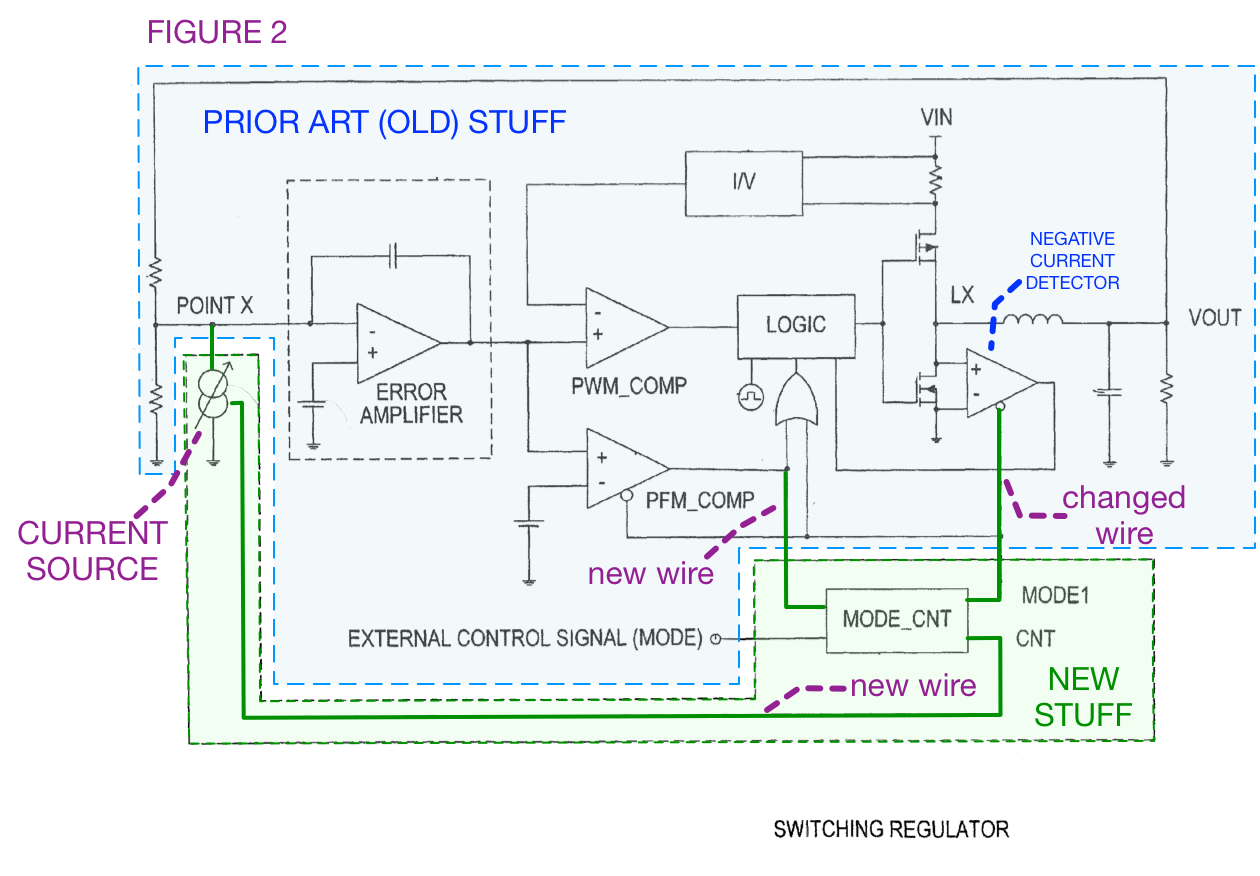
Figure 2 shows a similarly-cleaned up image with the new stuff added.
%26lt;img src="http://www.enigmatic-consulting.com/IP_blog/Kimura_newstuff_cleaned_up.png"%26gt;
How do these instructions change when we include the new stuff (the stuff in the green-shaded box in Figure 2)? We need to add something like this:
1. Connect a %26lt;b%26gt;current source%26lt;/b%26gt; [ok, it's actually a current sink in this case, and yes, only EE nerds care] to point X of the schematic. The new wire that connects this source is shown in green in the figure. Current sources have some specifications: the amount of current they conduct, the voltage range over which they work, and so on. This current source can be switched on and off, so we'd provide some other specifications: how much current is carried when the switch is off, how fast the switch turns on and off, and how you control the state of the switch. The other side of the current source is connected to ground, the reference voltage for all other voltages (typically e.g. the case of an instrument).
2. Connect a new wire to switch the current source on and off, also shown in green. Note that in order to implement this switchability, we have to describe how the wire controls the switch in the current source, and when the switch is to be on or off.
3. Connect a new (green) wire to the wire marked "PFM_COMP". Again we need to define what this wire does (in this case, carry a logic signal), and when that signal would be HIGH (a logical YES or 1) and LOW (a logical NO or 0).
4. Change the definition of the wire that used to connect to the little bubble on the Negative Current Detector box (a comparator, and no, COMP doesn't stand for compromise, in case you were wondering): we have a different specification for when this wire is HIGH or LOW than in the prior art diagram.
The need for each of the specifications that define e.g. the current source is part of the prior art. Once I tell you I need a current source, the first thing you ask is "how much current?", and the second thing is "over what voltage range?" Anywhere we need a current source, everyone we will work with knows we need to provide the specs for it. So the part that's different is the fact that we are connecting a current source to point X, where no such current source existing in the prior version. That's one new instruction. The details of the instruction are (in this case) all known prior art; the only new part is the existence of the component at this place. So we count this as one new thing. Like the kid with the block building, our person of ordinary skill needs to know what a current source is and how to get one that works. We just need to tell them where to put it.
Similarly, each new or changed wire needs a specification describing what it is up to. Everyone who can read one of these silly diagrams knows that if I put a wire somewhere I need to tell you what it is doing. That's part of the prior art. So each new wire is one new thing, carrying with it the questions whose answers are needed to make the new part work.
Note that the box marked "MODE_CNT" isn't counted as new, even though it was not present in prior art diagram in Figure 1. The MODE_CNT box is a known method of making sure that the wires do what they are supposed to do. Any other method could be substituted. Implementing it is part of the instructions for the wires.
Thus, when we finish counting, we find that, if we accept Kimura's representation of what the prior art is, then we have added four new instructions to something that existed before. The Hamming distance of this invention is four instructions from the prior art.
Note that we're not making assertions about what is obvious, only what is new. We are assuming a specific set of skills for the people who receive the instructions. This is a verifiable set of assumptions. The description of the prior art defines for us the person we are looking for: a person who can read Figure 1 and turn it into a working voltage converter. This person then needs to be able to implement the new voltage converter when provided with the four additional instructions.
Now, imagine I read Kimura's patent, and happened to have an old converter lying around on my desk (e.g. left over from my failed plot to take over the world using self-assembling robots, abandoned when it turned out the robots ran on 5 V and I only had 9 V power supplies). I could disassemble that converter. Let's imagine that I found that it had all the same parts, or functionally equivalent parts, as those shown in Figure 1. In addition, it had a current source as shown in Figure 2, but not the new wires connected to PFM_COMP and the Negative Current Detector (or their equivalents). Then I would have shown that the correct distance to the prior art was only 2 instructions instead of 4. That narrows the scope of Kimura's claimless patent, and makes it easier for me to improve it enough to no longer infringe. The more new instructions a patent has, the more space it protects for its owner. Claimless patents block copying but not progress.
In the next post (the final one for this series), we'll examine the issues that arise in trying to implement claimless patenting: how to choose the hierarchical level at which an instruction is defined, how to verify the efficacy of the instruction set, and how the choices made may differ from one area of art to another.
Daniel Dobkinhttp://www.againstmonopoly.org/dan@enigmatic-consulting.comPatentsThe patent we'll look at is US 8,698,473, uninformatively titled "Switching Regulator", from Takeshi Kimura of Yokohama, Japan, assigned to Spansion LLC here in my home town of Sunnyvale, CA. If you like picturesque places, you should visit Yokohama rather than Sunnyvale, preferably the Yokohama that never actually existed, as depicted in Goro Miyazaki's From Up On Poppy Hill. No one appears to have spent their time reading patents up on Poppy Hill.
US 8,698,47 is a pretty typical patent: a modest variation on an existing class of products. The topic is a device that converts one electrical voltage to another. For example, a device like the one described could convert the 3.7 volts it gets from a battery in a cellphone into 1.8 volts needed by the interface that the parts in the phone use to talk to each other.
The normal way to look at this application is to focus on the "inventive concept", whatever the heck that is. Instead, in the proposed claimless patent system, we will focus on what you tell a person of ordinary skill in the relevant art to do in order to make the patented thing, and how that set of instructions differs from any previous set. Kimura provides a particularly convenient example that does exactly that, at least if you happen to know something about electrical block diagrams, which a person of ordinary skill in this art certainly would. (For readers whose expertise is thankfully elsewhere, rest assured: you only need to know that the right person would understand what the funny symbols are, not that you do.)
Figure 1 below shows what's called a block diagram for an electrical part. (The figures shown are simplified and annotated versions of Kimura's Figures 1 and 12.) The various funny symbols represent electrical components that do something useful, like resisting the flow of current, storing charge, or amplifying a signal (making it bigger). Each line with dots on the ends represents a wire that conducts electricity between places in the circuit. "VIN" is the input voltage, to be converted to some other voltage "VOUT" (e.g. from 3.7 to 1.8 volts). This picture is an instruction set, telling our skilled person what components they need and how the components are to be connected together.
If Kimura's converter were to be built using discrete parts (that is, individual resistors and capacitors with wires, like the ones you can still find at Radio Shack), the instructions would also include a bill of materials. The Bill of Materials, or BOM for short, is a long list that tells someone how to buy the parts you need. For each part, there's typically a vendor, a model or part number, and optionally some specifications and pricing. If Kimura's converter were an integrated circuit, constructed as a chip on a silicon wafer, the bill of materials would be at least partially replaced by a specification for each component: how big a transistor to use, what value of resistance is needed for a resistor, and so on. In modern integrated circuit design, many parts are already available as libraries of designs, so the specification might also include something similar to the BOM, describing which library to use, and which named design to place in the circuit. For simplicity, we'll stick to the discrete-part approach below.
So the instructions provided to our skilled person for the prior art stuff would be, for example, the schematic diagram above, and a bill of materials for the parts, or a set of specifications. The skill of our person of ordinary skill in this art is to turn that set of instructions into a product that works as intended. Note that, even if you the reader don't understand what you are looking at, Kimura's application has defined for us the person of ordinary skill: a person for whom our Figure 1 DOES make sense and DOES suffice to describe what they are to build. If you hand this diagram to someone and they look blankly at you and ask "does COMP stand for Compromise?" then you've got the wrong person. The definition of a person of ordinary skill is thus testable, an important distinction from the existing patent system.
Figure 2 shows a similarly-cleaned up image with the new stuff added.
How do these instructions change when we include the new stuff (the stuff in the green-shaded box in Figure 2)? We need to add something like this:
1. Connect a current source [ok, it's actually a current sink in this case, and yes, only EE nerds care] to point X of the schematic. The new wire that connects this source is shown in green in the figure. Current sources have some specifications: the amount of current they conduct, the voltage range over which they work, and so on. This current source can be switched on and off, so we'd provide some other specifications: how much current is carried when the switch is off, how fast the switch turns on and off, and how you control the state of the switch. The other side of the current source is connected to ground, the reference voltage for all other voltages (typically e.g. the case of an instrument).
2. Connect a new wire to switch the current source on and off, also shown in green. Note that in order to implement this switchability, we have to describe how the wire controls the switch in the current source, and when the switch is to be on or off.
3. Connect a new (green) wire to the wire marked "PFM_COMP". Again we need to define what this wire does (in this case, carry a logic signal), and when that signal would be HIGH (a logical YES or 1) and LOW (a logical NO or 0).
4. Change the definition of the wire that used to connect to the little bubble on the Negative Current Detector box (a comparator, and no, COMP doesn't stand for compromise, in case you were wondering): we have a different specification for when this wire is HIGH or LOW than in the prior art diagram.
The need for each of the specifications that define e.g. the current source is part of the prior art. Once I tell you I need a current source, the first thing you ask is "how much current?", and the second thing is "over what voltage range?" Anywhere we need a current source, everyone we will work with knows we need to provide the specs for it. So the part that's different is the fact that we are connecting a current source to point X, where no such current source existing in the prior version. That's one new instruction. The details of the instruction are (in this case) all known prior art; the only new part is the existence of the component at this place. So we count this as one new thing. Like the kid with the block building, our person of ordinary skill needs to know what a current source is and how to get one that works. We just need to tell them where to put it.
Similarly, each new or changed wire needs a specification describing what it is up to. Everyone who can read one of these silly diagrams knows that if I put a wire somewhere I need to tell you what it is doing. That's part of the prior art. So each new wire is one new thing, carrying with it the questions whose answers are needed to make the new part work.
Note that the box marked "MODE_CNT" isn't counted as new, even though it was not present in prior art diagram in Figure 1. The MODE_CNT box is a known method of making sure that the wires do what they are supposed to do. Any other method could be substituted. Implementing it is part of the instructions for the wires.
Thus, when we finish counting, we find that, if we accept Kimura's representation of what the prior art is, then we have added four new instructions to something that existed before. The Hamming distance of this invention is four instructions from the prior art.
Note that we're not making assertions about what is obvious, only what is new. We are assuming a specific set of skills for the people who receive the instructions. This is a verifiable set of assumptions. The description of the prior art defines for us the person we are looking for: a person who can read Figure 1 and turn it into a working voltage converter. This person then needs to be able to implement the new voltage converter when provided with the four additional instructions.
Now, imagine I read Kimura's patent, and happened to have an old converter lying around on my desk (e.g. left over from my failed plot to take over the world using self-assembling robots, abandoned when it turned out the robots ran on 5 V and I only had 9 V power supplies). I could disassemble that converter. Let's imagine that I found that it had all the same parts, or functionally equivalent parts, as those shown in Figure 1. In addition, it had a current source as shown in Figure 2, but not the new wires connected to PFM_COMP and the Negative Current Detector (or their equivalents). Then I would have shown that the correct distance to the prior art was only 2 instructions instead of 4. That narrows the scope of Kimura's claimless patent, and makes it easier for me to improve it enough to no longer infringe. The more new instructions a patent has, the more space it protects for its owner. Claimless patents block copying but not progress.
In the next post (the final one for this series), we'll examine the issues that arise in trying to implement claimless patenting: how to choose the hierarchical level at which an instruction is defined, how to verify the efficacy of the instruction set, and how the choices made may differ from one area of art to another.
]]>Patents: Hamming It Up*2014-11-24T21:47:27-08:002014-11-24T21:47:27-08:00tag:www.againstmonopoly.org,2018:blog58058080000000006902014-11-24T21:47:27-08:00Every real thing that is made, if it is made by more than one person, involves instructions given from one person to another to describe what is to be made. Those instructions assume shared ideas and knowledge, which in total characterize the skill needed to give and receive them. Each instruction in turn sits on a hierarchical pile of other knowledge and associated instructions, because no real object in the modern world is made from scratch. Everything we do depends on the accumulated knowledge and practical skills of the society in which we live. This is the prior art.
In the claimless view of the patent world, a patent differs from the prior art in that the instructions for making the patented object contain, amongst all the known combinations of what has gone before, a new combination of prior-art stuff that did not previously exist. It's important to understand that all supposed inventions are combinations of the prior art. No one invents from scratch. Therefore, in measuring the distance between the prior art and the new object, we need to measure the new combination and not count the prior-art part of it.
To clarify how such a measure might work, let's build some block buildings. Readers may remember wooden blocks from their own childhood, or have more recent vicarious experience by way of their children, or other kids they know. Most kids go through a set of increasingly elaborate steps to build better block buildings. The steps are something like:
1. Pile a block on top of another one:
%26lt;img src="http://www.enigmatic-consulting.com/IP_blog/2blocks.png"%26gt;
2. Pile a bunch of blocks on top (that is, iterate step 1):
%26lt;img src="http://www.enigmatic-consulting.com/IP_blog/5blocks.png"%26gt;
3. Choose the upper blocks to be the same size as the first one, or smaller:
%26lt;img src="http://www.enigmatic-consulting.com/IP_blog/5blocks_samesize.png"%26gt;
4. Make four piles in a rectangle to make a building with walls (we'll skip the roof for now):
%26lt;img src="http://www.enigmatic-consulting.com/IP_blog/blockwalls.png"%26gt;
5. Interpenetrate the sidewalls to make a stronger building:
%26lt;img src="http://www.enigmatic-consulting.com/IP_blog/alternatingwalls.png"%26gt;
Let's look at a putative patent for concept number 5. The instructions are:
• put down two blocks of the same size, in parallel (prior art)
• space the blocks less than one block length apart (new instruction)
• finish the rectangle with two blocks perpendicular to the first two but lying on top of the first two (new instruction)
• iterate to make the building taller (prior art)
If a person of ordinary skill in the block building art is a kid about age 4, another kid can instruct them in the inventive step by showing them how to move the first two blocks close together. The action is actually quite complex - ask anyone who has to make a robot do it - but from the point of view of the typical block-builder-of-ordinary-skill, it's two instructions. Once you show the kid the interpenetrating part, he or she can make a whole building the new way.
Remember that each elementary action here rests on a complex series of prior art instructions. Someone got the rights to cut down a tree (which they hopefully replace in order to provide for future kids), someone did the cutting and transport, others ran machines that sliced the wood into block-sized pieces, smoothed the surfaces, optionally painted or stained the wood, and still others packaged the results, established distribution channels, and added marketing materials to appeal to kids and thus obligate their parents to purchase the result. A kid doesn't have to worry about this complex infrastructure, but it's all there. We don't count that infrastructure as part of the invention of interpenetrating walls. We don't count the step of placing the layers of blocks parallel to one another, or the ability to measure spacing relative to block size - the good block builder knows these things. We don't count piling the blocks up to make the building taller (iteration) - again, a block building kid knows how to do this. The interpenetrating wall block building differs by two elementary instructions from the solid wall block building. The Hamming distance from the prior art is 2. And that's a verifiable statement: you find a kid who likes to build block buildings, but doesn't do interpenetrating ones, and show them. Is demonstration of the new steps enumerated above sufficient for them to proceed? If yes, we've properly captured the steps needed.
Notice also that we aren't arguing whether the kid would discover interpenetrated buildings for herself - that is, we don't care if it's obvious or profound (as if we could tell!), just if it's different from what has been done so far. Inventiveness is measured by how far the new thing is from the prior art - how many new things I need to tell you so you can practice what I preach.
In the next post, we'll try applying this procedure to a typical US patent (specifically US 8,698,473). You can read ahead if you want.
*If you've been reading the previous posts in this series, you knew that terrible pun was inevitable -- just a matter of time.
Daniel Dobkinhttp://www.againstmonopoly.org/dan@enigmatic-consulting.comPatentsIn the claimless view of the patent world, a patent differs from the prior art in that the instructions for making the patented object contain, amongst all the known combinations of what has gone before, a new combination of prior-art stuff that did not previously exist. It's important to understand that all supposed inventions are combinations of the prior art. No one invents from scratch. Therefore, in measuring the distance between the prior art and the new object, we need to measure the new combination and not count the prior-art part of it.
To clarify how such a measure might work, let's build some block buildings. Readers may remember wooden blocks from their own childhood, or have more recent vicarious experience by way of their children, or other kids they know. Most kids go through a set of increasingly elaborate steps to build better block buildings. The steps are something like:
1. Pile a block on top of another one:
2. Pile a bunch of blocks on top (that is, iterate step 1):
3. Choose the upper blocks to be the same size as the first one, or smaller:
4. Make four piles in a rectangle to make a building with walls (we'll skip the roof for now):
5. Interpenetrate the sidewalls to make a stronger building:
Let's look at a putative patent for concept number 5. The instructions are:
• put down two blocks of the same size, in parallel (prior art)
• space the blocks less than one block length apart (new instruction)
• finish the rectangle with two blocks perpendicular to the first two but lying on top of the first two (new instruction)
• iterate to make the building taller (prior art)
If a person of ordinary skill in the block building art is a kid about age 4, another kid can instruct them in the inventive step by showing them how to move the first two blocks close together. The action is actually quite complex - ask anyone who has to make a robot do it - but from the point of view of the typical block-builder-of-ordinary-skill, it's two instructions. Once you show the kid the interpenetrating part, he or she can make a whole building the new way.
Remember that each elementary action here rests on a complex series of prior art instructions. Someone got the rights to cut down a tree (which they hopefully replace in order to provide for future kids), someone did the cutting and transport, others ran machines that sliced the wood into block-sized pieces, smoothed the surfaces, optionally painted or stained the wood, and still others packaged the results, established distribution channels, and added marketing materials to appeal to kids and thus obligate their parents to purchase the result. A kid doesn't have to worry about this complex infrastructure, but it's all there. We don't count that infrastructure as part of the invention of interpenetrating walls. We don't count the step of placing the layers of blocks parallel to one another, or the ability to measure spacing relative to block size - the good block builder knows these things. We don't count piling the blocks up to make the building taller (iteration) - again, a block building kid knows how to do this. The interpenetrating wall block building differs by two elementary instructions from the solid wall block building. The Hamming distance from the prior art is 2. And that's a verifiable statement: you find a kid who likes to build block buildings, but doesn't do interpenetrating ones, and show them. Is demonstration of the new steps enumerated above sufficient for them to proceed? If yes, we've properly captured the steps needed.
Notice also that we aren't arguing whether the kid would discover interpenetrated buildings for herself - that is, we don't care if it's obvious or profound (as if we could tell!), just if it's different from what has been done so far. Inventiveness is measured by how far the new thing is from the prior art - how many new things I need to tell you so you can practice what I preach.
In the next post, we'll try applying this procedure to a typical US patent (specifically US 8,698,473). You can read ahead if you want.
*If you've been reading the previous posts in this series, you knew that terrible pun was inevitable -- just a matter of time.
]]>
 If Kimura's converter were to be built using discrete parts (that is, individual resistors and capacitors with wires, like the ones you can still find at Radio Shack), the instructions would also include a bill of materials. The Bill of Materials, or BOM for short, is a long list that tells someone how to buy the parts you need. For each part, there's typically a vendor, a model or part number, and optionally some specifications and pricing. If Kimura's converter were an integrated circuit, constructed as a chip on a silicon wafer, the bill of materials would be at least partially replaced by a specification for each component: how big a transistor to use, what value of resistance is needed for a resistor, and so on. In modern integrated circuit design, many parts are already available as libraries of designs, so the specification might also include something similar to the BOM, describing which library to use, and which named design to place in the circuit. For simplicity, we'll stick to the discrete-part approach below.
So the instructions provided to our skilled person for the prior art stuff would be, for example, the schematic diagram above, and a bill of materials for the parts, or a set of specifications. The skill of our person of ordinary skill in this art is to turn that set of instructions into a product that works as intended. Note that, even if you the reader don't understand what you are looking at, Kimura's application has defined for us the person of ordinary skill: a person for whom our Figure 1 DOES make sense and DOES suffice to describe what they are to build. If you hand this diagram to someone and they look blankly at you and ask "does COMP stand for Compromise?" then you've got the wrong person. The definition of a person of ordinary skill is thus testable, an important distinction from the existing patent system.
Figure 2 shows a similarly-cleaned up image with the new stuff added.
If Kimura's converter were to be built using discrete parts (that is, individual resistors and capacitors with wires, like the ones you can still find at Radio Shack), the instructions would also include a bill of materials. The Bill of Materials, or BOM for short, is a long list that tells someone how to buy the parts you need. For each part, there's typically a vendor, a model or part number, and optionally some specifications and pricing. If Kimura's converter were an integrated circuit, constructed as a chip on a silicon wafer, the bill of materials would be at least partially replaced by a specification for each component: how big a transistor to use, what value of resistance is needed for a resistor, and so on. In modern integrated circuit design, many parts are already available as libraries of designs, so the specification might also include something similar to the BOM, describing which library to use, and which named design to place in the circuit. For simplicity, we'll stick to the discrete-part approach below.
So the instructions provided to our skilled person for the prior art stuff would be, for example, the schematic diagram above, and a bill of materials for the parts, or a set of specifications. The skill of our person of ordinary skill in this art is to turn that set of instructions into a product that works as intended. Note that, even if you the reader don't understand what you are looking at, Kimura's application has defined for us the person of ordinary skill: a person for whom our Figure 1 DOES make sense and DOES suffice to describe what they are to build. If you hand this diagram to someone and they look blankly at you and ask "does COMP stand for Compromise?" then you've got the wrong person. The definition of a person of ordinary skill is thus testable, an important distinction from the existing patent system.
Figure 2 shows a similarly-cleaned up image with the new stuff added.
 How do these instructions change when we include the new stuff (the stuff in the green-shaded box in Figure 2)? We need to add something like this:
1. Connect a current source [ok, it's actually a current sink in this case, and yes, only EE nerds care] to point X of the schematic. The new wire that connects this source is shown in green in the figure. Current sources have some specifications: the amount of current they conduct, the voltage range over which they work, and so on. This current source can be switched on and off, so we'd provide some other specifications: how much current is carried when the switch is off, how fast the switch turns on and off, and how you control the state of the switch. The other side of the current source is connected to ground, the reference voltage for all other voltages (typically e.g. the case of an instrument).
2. Connect a new wire to switch the current source on and off, also shown in green. Note that in order to implement this switchability, we have to describe how the wire controls the switch in the current source, and when the switch is to be on or off.
3. Connect a new (green) wire to the wire marked "PFM_COMP". Again we need to define what this wire does (in this case, carry a logic signal), and when that signal would be HIGH (a logical YES or 1) and LOW (a logical NO or 0).
4. Change the definition of the wire that used to connect to the little bubble on the Negative Current Detector box (a comparator, and no, COMP doesn't stand for compromise, in case you were wondering): we have a different specification for when this wire is HIGH or LOW than in the prior art diagram.
The need for each of the specifications that define e.g. the current source is part of the prior art. Once I tell you I need a current source, the first thing you ask is "how much current?", and the second thing is "over what voltage range?" Anywhere we need a current source, everyone we will work with knows we need to provide the specs for it. So the part that's different is the fact that we are connecting a current source to point X, where no such current source existing in the prior version. That's one new instruction. The details of the instruction are (in this case) all known prior art; the only new part is the existence of the component at this place. So we count this as one new thing. Like the kid with the block building, our person of ordinary skill needs to know what a current source is and how to get one that works. We just need to tell them where to put it.
Similarly, each new or changed wire needs a specification describing what it is up to. Everyone who can read one of these silly diagrams knows that if I put a wire somewhere I need to tell you what it is doing. That's part of the prior art. So each new wire is one new thing, carrying with it the questions whose answers are needed to make the new part work.
Note that the box marked "MODE_CNT" isn't counted as new, even though it was not present in prior art diagram in Figure 1. The MODE_CNT box is a known method of making sure that the wires do what they are supposed to do. Any other method could be substituted. Implementing it is part of the instructions for the wires.
Thus, when we finish counting, we find that, if we accept Kimura's representation of what the prior art is, then we have added four new instructions to something that existed before. The Hamming distance of this invention is four instructions from the prior art.
Note that we're not making assertions about what is obvious, only what is new. We are assuming a specific set of skills for the people who receive the instructions. This is a verifiable set of assumptions. The description of the prior art defines for us the person we are looking for: a person who can read Figure 1 and turn it into a working voltage converter. This person then needs to be able to implement the new voltage converter when provided with the four additional instructions.
Now, imagine I read Kimura's patent, and happened to have an old converter lying around on my desk (e.g. left over from my failed plot to take over the world using self-assembling robots, abandoned when it turned out the robots ran on 5 V and I only had 9 V power supplies). I could disassemble that converter. Let's imagine that I found that it had all the same parts, or functionally equivalent parts, as those shown in Figure 1. In addition, it had a current source as shown in Figure 2, but not the new wires connected to PFM_COMP and the Negative Current Detector (or their equivalents). Then I would have shown that the correct distance to the prior art was only 2 instructions instead of 4. That narrows the scope of Kimura's claimless patent, and makes it easier for me to improve it enough to no longer infringe. The more new instructions a patent has, the more space it protects for its owner. Claimless patents block copying but not progress.
In the next post (the final one for this series), we'll examine the issues that arise in trying to implement claimless patenting: how to choose the hierarchical level at which an instruction is defined, how to verify the efficacy of the instruction set, and how the choices made may differ from one area of art to another.
]]>
How do these instructions change when we include the new stuff (the stuff in the green-shaded box in Figure 2)? We need to add something like this:
1. Connect a current source [ok, it's actually a current sink in this case, and yes, only EE nerds care] to point X of the schematic. The new wire that connects this source is shown in green in the figure. Current sources have some specifications: the amount of current they conduct, the voltage range over which they work, and so on. This current source can be switched on and off, so we'd provide some other specifications: how much current is carried when the switch is off, how fast the switch turns on and off, and how you control the state of the switch. The other side of the current source is connected to ground, the reference voltage for all other voltages (typically e.g. the case of an instrument).
2. Connect a new wire to switch the current source on and off, also shown in green. Note that in order to implement this switchability, we have to describe how the wire controls the switch in the current source, and when the switch is to be on or off.
3. Connect a new (green) wire to the wire marked "PFM_COMP". Again we need to define what this wire does (in this case, carry a logic signal), and when that signal would be HIGH (a logical YES or 1) and LOW (a logical NO or 0).
4. Change the definition of the wire that used to connect to the little bubble on the Negative Current Detector box (a comparator, and no, COMP doesn't stand for compromise, in case you were wondering): we have a different specification for when this wire is HIGH or LOW than in the prior art diagram.
The need for each of the specifications that define e.g. the current source is part of the prior art. Once I tell you I need a current source, the first thing you ask is "how much current?", and the second thing is "over what voltage range?" Anywhere we need a current source, everyone we will work with knows we need to provide the specs for it. So the part that's different is the fact that we are connecting a current source to point X, where no such current source existing in the prior version. That's one new instruction. The details of the instruction are (in this case) all known prior art; the only new part is the existence of the component at this place. So we count this as one new thing. Like the kid with the block building, our person of ordinary skill needs to know what a current source is and how to get one that works. We just need to tell them where to put it.
Similarly, each new or changed wire needs a specification describing what it is up to. Everyone who can read one of these silly diagrams knows that if I put a wire somewhere I need to tell you what it is doing. That's part of the prior art. So each new wire is one new thing, carrying with it the questions whose answers are needed to make the new part work.
Note that the box marked "MODE_CNT" isn't counted as new, even though it was not present in prior art diagram in Figure 1. The MODE_CNT box is a known method of making sure that the wires do what they are supposed to do. Any other method could be substituted. Implementing it is part of the instructions for the wires.
Thus, when we finish counting, we find that, if we accept Kimura's representation of what the prior art is, then we have added four new instructions to something that existed before. The Hamming distance of this invention is four instructions from the prior art.
Note that we're not making assertions about what is obvious, only what is new. We are assuming a specific set of skills for the people who receive the instructions. This is a verifiable set of assumptions. The description of the prior art defines for us the person we are looking for: a person who can read Figure 1 and turn it into a working voltage converter. This person then needs to be able to implement the new voltage converter when provided with the four additional instructions.
Now, imagine I read Kimura's patent, and happened to have an old converter lying around on my desk (e.g. left over from my failed plot to take over the world using self-assembling robots, abandoned when it turned out the robots ran on 5 V and I only had 9 V power supplies). I could disassemble that converter. Let's imagine that I found that it had all the same parts, or functionally equivalent parts, as those shown in Figure 1. In addition, it had a current source as shown in Figure 2, but not the new wires connected to PFM_COMP and the Negative Current Detector (or their equivalents). Then I would have shown that the correct distance to the prior art was only 2 instructions instead of 4. That narrows the scope of Kimura's claimless patent, and makes it easier for me to improve it enough to no longer infringe. The more new instructions a patent has, the more space it protects for its owner. Claimless patents block copying but not progress.
In the next post (the final one for this series), we'll examine the issues that arise in trying to implement claimless patenting: how to choose the hierarchical level at which an instruction is defined, how to verify the efficacy of the instruction set, and how the choices made may differ from one area of art to another.
]]>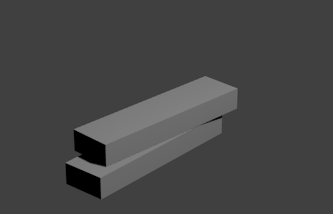 2. Pile a bunch of blocks on top (that is, iterate step 1):
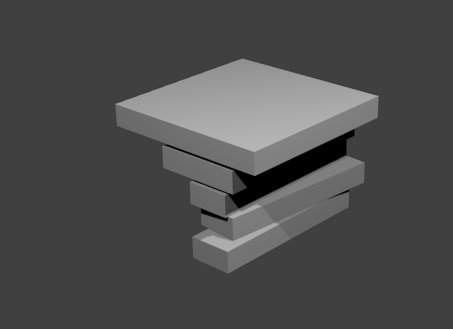 3. Choose the upper blocks to be the same size as the first one, or smaller:
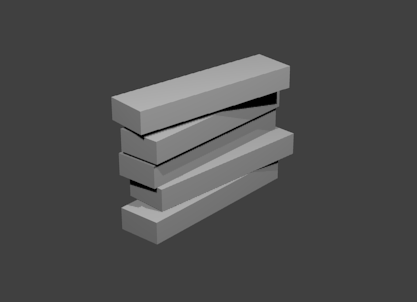 4. Make four piles in a rectangle to make a building with walls (we'll skip the roof for now):
 5. Interpenetrate the sidewalls to make a stronger building:
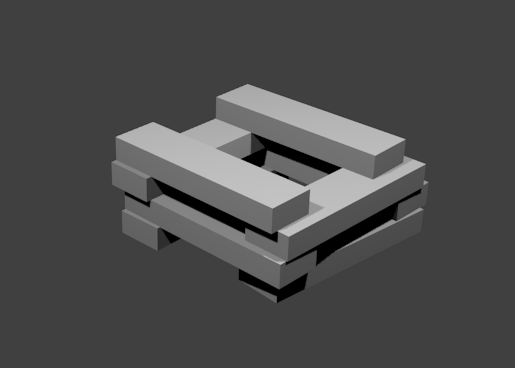 Let's look at a putative patent for concept number 5. The instructions are:
• put down two blocks of the same size, in parallel (prior art)
• space the blocks less than one block length apart (new instruction)
• finish the rectangle with two blocks perpendicular to the first two but lying on top of the first two (new instruction)
• iterate to make the building taller (prior art)
If a person of ordinary skill in the block building art is a kid about age 4, another kid can instruct them in the inventive step by showing them how to move the first two blocks close together. The action is actually quite complex - ask anyone who has to make a robot do it - but from the point of view of the typical block-builder-of-ordinary-skill, it's two instructions. Once you show the kid the interpenetrating part, he or she can make a whole building the new way.
Remember that each elementary action here rests on a complex series of prior art instructions. Someone got the rights to cut down a tree (which they hopefully replace in order to provide for future kids), someone did the cutting and transport, others ran machines that sliced the wood into block-sized pieces, smoothed the surfaces, optionally painted or stained the wood, and still others packaged the results, established distribution channels, and added marketing materials to appeal to kids and thus obligate their parents to purchase the result. A kid doesn't have to worry about this complex infrastructure, but it's all there. We don't count that infrastructure as part of the invention of interpenetrating walls. We don't count the step of placing the layers of blocks parallel to one another, or the ability to measure spacing relative to block size - the good block builder knows these things. We don't count piling the blocks up to make the building taller (iteration) - again, a block building kid knows how to do this. The interpenetrating wall block building differs by two elementary instructions from the solid wall block building. The Hamming distance from the prior art is 2. And that's a verifiable statement: you find a kid who likes to build block buildings, but doesn't do interpenetrating ones, and show them. Is demonstration of the new steps enumerated above sufficient for them to proceed? If yes, we've properly captured the steps needed.
Notice also that we aren't arguing whether the kid would discover interpenetrated buildings for herself - that is, we don't care if it's obvious or profound (as if we could tell!), just if it's different from what has been done so far. Inventiveness is measured by how far the new thing is from the prior art - how many new things I need to tell you so you can practice what I preach.
In the next post, we'll try applying this procedure to a typical US patent (specifically US 8,698,473). You can read ahead if you want.
*If you've been reading the previous posts in this series, you knew that terrible pun was inevitable -- just a matter of time.
]]>
Let's look at a putative patent for concept number 5. The instructions are:
• put down two blocks of the same size, in parallel (prior art)
• space the blocks less than one block length apart (new instruction)
• finish the rectangle with two blocks perpendicular to the first two but lying on top of the first two (new instruction)
• iterate to make the building taller (prior art)
If a person of ordinary skill in the block building art is a kid about age 4, another kid can instruct them in the inventive step by showing them how to move the first two blocks close together. The action is actually quite complex - ask anyone who has to make a robot do it - but from the point of view of the typical block-builder-of-ordinary-skill, it's two instructions. Once you show the kid the interpenetrating part, he or she can make a whole building the new way.
Remember that each elementary action here rests on a complex series of prior art instructions. Someone got the rights to cut down a tree (which they hopefully replace in order to provide for future kids), someone did the cutting and transport, others ran machines that sliced the wood into block-sized pieces, smoothed the surfaces, optionally painted or stained the wood, and still others packaged the results, established distribution channels, and added marketing materials to appeal to kids and thus obligate their parents to purchase the result. A kid doesn't have to worry about this complex infrastructure, but it's all there. We don't count that infrastructure as part of the invention of interpenetrating walls. We don't count the step of placing the layers of blocks parallel to one another, or the ability to measure spacing relative to block size - the good block builder knows these things. We don't count piling the blocks up to make the building taller (iteration) - again, a block building kid knows how to do this. The interpenetrating wall block building differs by two elementary instructions from the solid wall block building. The Hamming distance from the prior art is 2. And that's a verifiable statement: you find a kid who likes to build block buildings, but doesn't do interpenetrating ones, and show them. Is demonstration of the new steps enumerated above sufficient for them to proceed? If yes, we've properly captured the steps needed.
Notice also that we aren't arguing whether the kid would discover interpenetrated buildings for herself - that is, we don't care if it's obvious or profound (as if we could tell!), just if it's different from what has been done so far. Inventiveness is measured by how far the new thing is from the prior art - how many new things I need to tell you so you can practice what I preach.
In the next post, we'll try applying this procedure to a typical US patent (specifically US 8,698,473). You can read ahead if you want.
*If you've been reading the previous posts in this series, you knew that terrible pun was inevitable -- just a matter of time.
]]>